Tampilkan postingan dengan label Science. Tampilkan semua postingan

Minggu, 09 Agustus 2015

Space Station astronauts make history, eat first space-grown veggies


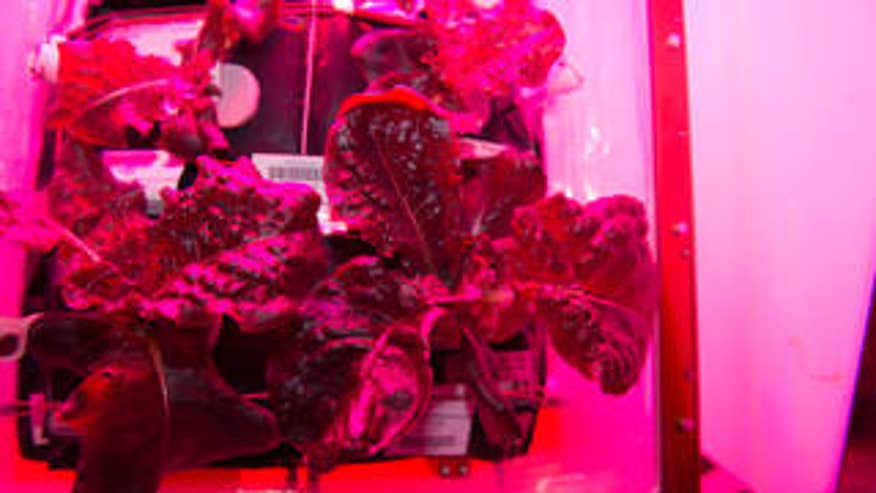
Astronauts on the International Space Station made history Monday when they munched space-grown vegetables for the first time.
Crew members, including American one-year astronaut Scott Kelly, sampled the delights of Red Romaine lettuce grown in the microgravity environment of space. The lettuce was grown on the ‘Veggie’ plant system in NASA’s orbiting lab on the space station.
“Crew tastes red romaine lettuce with oil & vinegar for #NASAVeggie study and#JourneyToMars,” tweeted the International Space Station’s Twitter account.
“Chomp! Our first veggies were harvested & consumed by astronauts in space!,” added NASA, tweeting an image of Kelly enjoying his historic meal.
The leafy greens were cleaned with citric acid-based, food safe sanitizing wipes, according to NASA.
The agency’s plant experiment, dubbed Veg-01, uses rooting “pillows,” which contain the seeds.
NASA sees the development of sustainable food in space as a critical part of its Journey to Mars project, which aims to send humans to the Red Planet in the 2030s. However, the long journey to Mars, estimated to take six months, poses a unique set of challenges to scientists.
“As NASA moves toward long-duration exploration missions farther into the solar system, Veggie will be a resource for crew food growth and consumption,” explained NASA, in a statement. “It also could be used by astronauts for recreational gardening activities during deep space missions.”
The first “pillows” were activated, watered and cared for by astronaut Steve Swanson in May 2014, according to NASA. After 33 days of growth, the plants were harvested and returned to Earth in October 2014, undergoing food safety analysis at the agency’s Kennedy Space Center.
The second set of Veg-01 plant “pillows” were activated by Scott Kelly on July 8 and grew again for 33 days before being harvested. The seeds had been on the space state for 15 months before being activated, NASA said.

Sabtu, 08 Agustus 2015

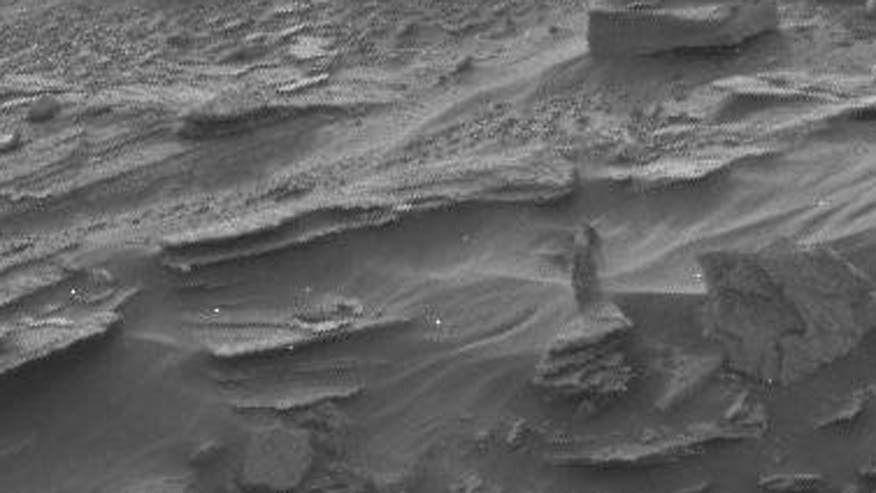
Strange ‘figure’ spotted by Mars Curiosity Rover


The truth is out there … maybe. A mysterious woman-like shape in a picture taken by NASA’s Mars Curiosity Rover is creating buzz on social media.
In a post entitled “Alien Woman on Mars Watching Rover From Hill” the UFO Sightings Daily website said that the shape “looks like a woman partly cloaked.”
Mashable is somewhat more circumspect in its analysis of the image. “Perhaps it's a cloaked ghost Martian woman, perhaps it's a statue left over from a once great society, perhaps it's a piece of dirt,” it said. (For the record, we agree with the “piece of dirt” assessment).
What do you think? Here’s a link to the image, which was posted by NASA’s Jet Propulsion Laboratory.

Kamis, 06 Agustus 2015

Tiny glider could cruise through Martian skies


A tiny aircraft could be plying Mars' skies less than a decade from now.
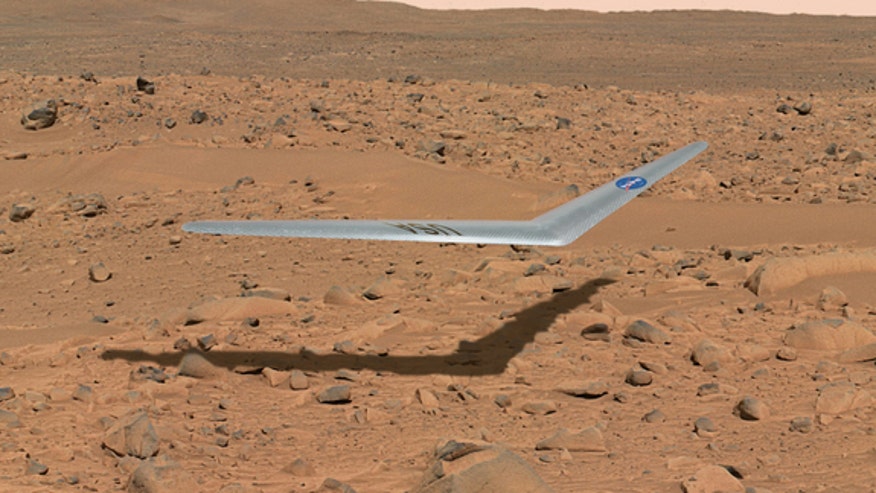
NASA researchers are developing a glider, called Preliminary Research Aerodynamic Design to Land on Mars (Prandtl-m), for possible inclusion on a Mars rover mission in the 2022-2024 time frame.
Prandtl-m would weigh a maximum of 2.6 lbs. here on Earth (1 lb in Mars' reduced-gravity environment) and feature a wingspan of just 24 inches, project team members said. The craft would fold up to fit inside a 3U cubesat — a spacecraft about the size of a loaf of bread — that would tag along with the rover. [History of Robotic Mars Missions (Infographic)]
"The aircraft would be part of the ballast that would be ejected from the aeroshell that takes the Mars rover to the planet," Prandtl-m program manager Al Bowers, the chief scientist at NASA's Armstrong Flight Research Center in Edwards, California, said in a statement.
"It would be able to deploy and fly in the Martian atmosphere and glide down and land," Bowers added. "The Prandtl-m could overfly some of the proposed landing sites for a future astronaut mission and send back to Earth very detailed high-resolution photographic map images that could tell scientists about the suitability of those landing sites."
The glider would have a flight time of 10 minutes in the Martian sky, and could cover about 20 miles, Bowers said.
Bowers and his team plan to test a Prandtl-m prototype (which will be designed and built with the help of community college students this summer) during a high-altitude balloon flight later this year, either from Tucson, Arizona, or Tillamook, Oregon.
The balloon will drop the aircraft at an altitude of about 100,000 feet, where the thin air provides a good analog of the Martian atmosphere.
"We could have one of two small science payloads on the Prandtl-m on that first balloon flight," Bowers said. "It might be the mapping camera, or one might be a small, high-altitude radiometer to measure radiation at very high altitudes of Earth's atmosphere. Eventually the aircraft may carry both of them at the same time."
A second balloon flight to about the same altitude is planned for 2016. In that test, Prandtl-m will be folded inside a cubesat container; after the drop, the glider will deploy from the container, unfold and fly away, Bowers said.
NASA's Flight Opportunities Program has agreed to fund both of these balloon-aided tests. If everything goes well, Prandtl-m may then find its way onto a sounding rocket that goes into suborbital space.
"That mission could be to 450,000 feet and the release from a cubesat at apogee. The aircraft would fall back into the Earth's atmosphere, and as it approaches the 110,000-to-115,000-feet altitude range, the glider would deploy just as though it was over the surface of Mars," Bowers said.
"If the Prandtl-m completes a 450,000-foot drop, then I think the project stands a very good chance of being able to go to NASA Headquarters and say we would like permission to ride to Mars with one of the rovers," he added.

Selasa, 04 Agustus 2015

NASA's Curiosity rover eyes weird rock on Mars


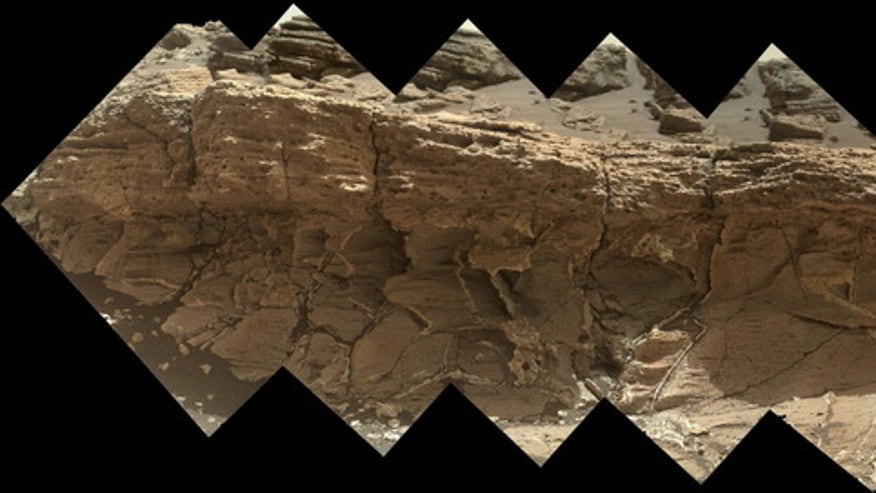
NASA's Mars rover Curiosity went out of its way to investigate a rock the likes of which it has never seen before on the Red Planet.
Measurements by Curiosity's rock-zapping ChemCam laser and another instrument revealed that the target, a chunk of bedrock dubbed Elk, contains high levels of silica and hydrogen, NASA officials said.
The abundance of silica — a silicon-oxygen compound commonly found here on Earth in the form of quartz — suggests that the bedrock may provide conditions conducive to the preservation of ancient carbon-containing organic molecules, if any exist in the area, the officials added. So Curiosity's handlers sent the rover back 151 feet to check Elk out. [Latest Amazing Mars Photos by NASA's Curiosity Rover]
"One never knows what to expect on Mars, but the Elk target was interesting enough to go back and investigate," ChemCam principal investigator Roger Wiens, of Los Alamos National Laboratory in New Mexico, said in a statement.
Elk lies near a spot on the lower reaches of the 3.4-mile-high Mount Sharp, called Marias Pass, whose rocks Curiosity had been studying. Marias Pass is a "geological contact zone" where dark sandstone meets lighter mudstone.
"We found an outcrop named Missoula where the two rock types came together, but it was quite small and close to the ground," Curiosity project scientist Ashwin Vasavada, of NASA's Jet Propulsion Laboratory in Pasadena, California, said in the same statement. "We used the robotic arm to capture a dog's-eye view with the MAHLI [Mars Hand Lens Imager] camera, getting our nose right in there."
ChemCam had fired at the Elk bedrock from the top of a small hill close to Marias Pass, which Curiosity had summitted before taking a look at the contact zone. After looking at the Missoula outcrop, the 1-ton rover began moving on, but an analysis of ChemCam's data persuaded the team to turn Curiosity around for a closer look at Elk, mission team members said.
"ChemCam acts like eyes and ears of the rover for nearby objects," Wiens said.
As Curiosity gathers data, mission engineers continue to investigate a short circuit that cropped up in the rover's sample-collecting drill in February. No short circuits occurred during a July 18 engineering test, so the Curiosity team plans to conduct some drilling trials on rocks in the near future, NASA officials said.
Curiosity has been exploring Mars' 96-mile-wide Gale Crater for nearly three years now. The six-wheeled robot touched down on the night of Aug. 5, 2012, on a mission to determine if Gale could ever have supported microbial life.
Curiosity scientists answered this question early in the mission, finding that Gale Crater once harbored an extensive lake-and-stream system that could have supported microbial life, if such organisms had ever evolved on the Red Planet.

Minggu, 02 Agustus 2015

California drought could doom endangered fish caught in the center of state's water battles

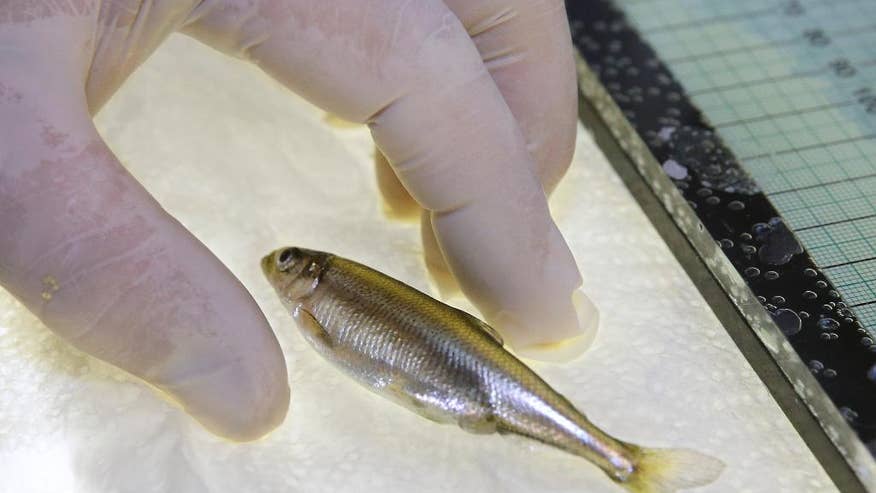
California's historic drought could wipe out a tiny, endangered fish that's played an outsized role in the state's water wars.
The delta smelt lives in the Sacramento-San Joaquin River Delta, the West Coast's largest estuary that supplies water to Central Valley farms and millions of Southern California residents.
The silvery, finger-sized fish has been in trouble for years, but the four-year drought is helping to push the smelt to the brink of extinction. And it threatens several other native fish species, including the longfin smelt, green sturgeon and winter-run Chinook salmon.
In July, a key index of delta smelt abundance hit zero for the first time since the survey began in 1959. Researchers found a handful of smelt, but the number was too small to register on the population gauge.
"The delta smelt is basically on its last legs right now. We'll be lucky if it survives the coming year," said Peter Moyle, a fish biologist at the University of California, Davis who has been studying the fish for four decades.
On a recent fish survey, Moyle and three other researchers trawled the turbid waters of the sprawling estuary that once teemed with the delta smelt.
They pulled a net out of the water and emptied dozens of fish into a plastic bin on their research boat. They logged and tossed back 13 species, including carp, crappie, catfish and striped bass — but no delta smelt.
Delta smelt populations have been declining for decades due to invasive predators, pollution, habitat loss and increased water exports to farms and cities. The drought has worsened conditions by reducing freshwater flows and raising water temperatures.
"The drought has basically made all the things that were bad for smelt worse," Moyle said.
The delta smelt has been at the center of vicious water fights between farmers, fishermen, cities and environmentalists ever since it was listed as a threatened species under the U.S. Endangered Species Act in 1993. It was listed as an endangered under state law in 2010.
The government regularly cuts water exports from the delta to protect the smelt and other threatened fish from being sucked into the giant pumps that send water south.
Scientists and environmentalists say the sensitive fish needs protection because it's a key indicator of the delta's health, but farmers say too much precious water has been wasted on the fish — water that could be used to grow crops and fill reservoirs.
Stanislaus County almond grower Jim Jasper, who relies on delta water to irrigate his orchards, was a part of a lawsuit that challenged the U.S. Fish and Wildlife Service over delta smelt protections. The U.S. Supreme Court rejected their appeal earlier this year, leaving the water restrictions in place.
Last year, Jasper pulled out 400 acres of almond trees — about one-fifth of his orchards — because he couldn't get enough water to irrigate them, reducing his almond production and forcing him to cut employee work hours.
Standing next to the irrigation canal that delivers water from the delta, Jasper said endangered species protections have worsened the agricultural impacts of the drought.
"The delta smelt continues to wrack a lot of havoc on today's farming community," said Jasper, who runs Steward & Jasper Orchards, the Newman, California-based almond company his father co-founded in 1948. "If it became extinct would anybody's lives change? I really don't think so."
The UC Davis Fish Conservation and Culture Laboratory in Byron may be the last place where you can still find large numbers of delta smelt.
The hatchery was recently awarded a $10 million federal grant to continue its work breeding the smelt in captivity for scientific research and to ensure its survival if the species vanishes from the wild.
"One of our most important projects is to maintain a refuge population of this species," said Tien-Chieh Hung, the lab's director. "We may be the place that holds the most delta smelt in the world."
While the lab could eventually release its carefully bred smelt into the delta, there's no guarantee they could survive in the wild and there would be no point if their native habitat can no longer support them.
That's why researchers say it's better to protect the smelt now before they disappear from the delta.
"If you're saving the smelt," Moyle said, "you're saving the habitat for other species in the delta as well."

Sabtu, 01 Agustus 2015

Archaeologists uncover clues in Roanoke Island mystery


The mystery of Roanoke Island may be one for the books. Two archaeological teams have dug up new evidence pointing to the fate of English colonists who mysteriously vanished from the North Carolina island 425 years ago, National Geographic reports.
One collection of items appears to support the long-held theory that some colonists moved to Hatteras Island, about 50 miles southeast of Roanoke. "The evidence is that they assimilated with the Native Americans but kept their goods," says chief archaeologist Mark Horton.
Among the Hatteras Island finds: a small bit of a slate writing tablet marked by the letter "M," a rapier hilt likely dating to the late 16th century, and pieces of iron, ingot, and stoneware apparently dating to the same period.
What's more, the name of a native American settlement on Hatteras Island—"Croatoan"—was found etched into a post in 1590 when all the colonists had vanished. For the second find, archaeologists used a map drawn by colony governor John White in 1585.
The map includes an "X" obscured by a patch and may have been a "'cover-up' ... to keep information from the public and from foreign agents," a historian toldNational Geographic two years ago.
The "X" marked a site on Albemarle Sound, an estuary in North Carolina, where archaeologists recently discovered dozens of pottery pieces that resemble others found on Roanoke Island.
So is this finally proof? Not really, because it's hard to date items precisely or know how they got there. "What we’ve found is tantalizing," a volunteer says.
"I would love to see some definitive evidence, but what we have is fragmentary.” (In other US history news: Archaeologists have pinpointed a key location in the Hatfield-McCoy feud.)
This article originally appeared on Newser: Roanoke Island Mystery May Finally Be Solved.

Minggu, 26 Juli 2015

New jelly-bean-size 'masked' frog discovered in the Andes


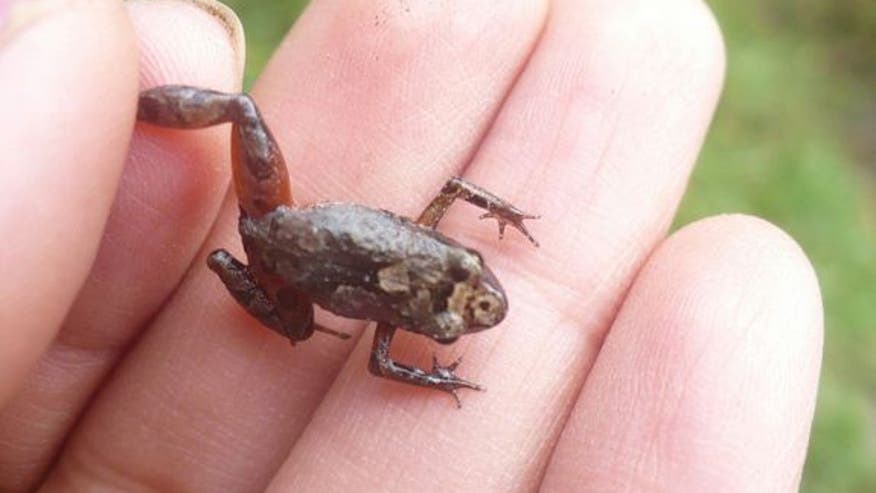
A tiny new frog species discovered in the Peruvian Andes has a white-mottled belly and a dark face mask that makes it look like a bandit.
Noblella madreselva lives in the humid cloud forest near Cusco, Peru, probably only in the valleys right around where it was discovered, researchers report Aug. 6 in the journal ZooKeys. The frogs, which are not much bigger than jelly beans, can fit on the tip of a human finger. They're active during the day, and live in leaf litter on the forest floor.
Vanessa Uscapi, a biologist at the National University of Saint Anthony the Abbot in Cusco, Peru, discovered the new tiny frog in January 2011, but only now has it been officially described. She and her colleagues picked the name madreselva to honor conservation initiatives in the region: The word means "mother jungle" and is also the name of a nearby ecotourism lodge and a small valley where a group called Sircadia is trying to launch a sustainable eco-community. [In Photos: Teeny-Tiny Frogs Found in Brazil]
N. madreselva has a dark-brown body with a darker patch on its head. Its belly is decorated with striking white marks. It's not the only recently discovered tiny frog with bold coloration; in June, researchers in Brazil announced the discovery of seven itsy-bitsy new frogs from rainforests in Brazil. Those frogs, all of which belong to the genus Brachycephalus, came in colors ranging from greenish-brown to bright orange and blue.
The smallest frog ever discovered hails from Papua New Guinea, and could perch quite comfortably on a penny. Frogs, of the genus Paedophryne, are less than half an inch long. The smallest species in the genus, Paedophryne amauensis, grows to be just 0.3 inches, on average. It's not only the world's smallest frog, but also the smallest vertebrate discovered so far.
The newly discovered Peruvian frog likely has a very limited geographical range, making it vulnerable to the effects of deforestation and habitat loss, Uscapi and her colleagues said. Andean frogs are also at risk of a deadly chytrid funguscalled Batrachochytrium dendrobatidis. This fungus has devastated frog populations worldwide. It causes the amphibians' skin to harden, disrupting their electrolyte balance and causing cardiac arrest. A December 2013 study in the journal Conservation Biology found that climate change in the Andes is increasing the area in which this fungus can thrive. Alessandro Catenazzi, one of the researchers on the team that discovered the new frog along with Uscapi, was an author of that 2013 study as well.
The researchers found that highlands frogs in the Andes were vulnerable to the fungus, while lowlands frogs were likely to suffer not from the fungus, but from warming temperatures.
"The frogs in the highlands will not suffer from climate change anytime soon, but they're doomed because of the fungus, whereas the frogs in the lowlands are shielded from the fungus but they're going to be toasted because it's too hot," Catenazzi told Live Science at the time.

Twitter Delicious Facebook Digg Stumbleupon Favorites More

 
Design by Free WordPress Themes | Bloggerized by Lasantha - Premium Blogger Themes | Affiliate Network Reviews